Preparing a nursery is an exercise in anticipation. Adults who have not yet met the small person they are preparing for may find themselves considering the hand of a cotton jersey, the virtues of a waterproof layer, and whether a fitted sheet in a quiet shade of green will make the room feel more settled. These are reasonable questions. But when the subject is infant sleep, the most useful question is often the plainest: Does this item belong in the crib while the baby is sleeping?
Current safe-sleep guidance from organizations including the American Academy of Pediatrics (AAP) emphasizes a simple sleep surface: place a baby on their back on a firm, flat, non-inclined mattress with a tightly fitted sheet, and keep the sleep area free of soft objects and loose bedding. That means no pillows, comforters, quilts, stuffed toys, or padded bumpers in the crib. A carefully chosen fabric can matter for comfort and laundering, but it does not replace the fundamentals of infant sleep safety.
Organic crib bedding is best understood in that light. The word “organic” may help describe how a fiber was produced or processed, depending on the certification and the particular product. It does not, by itself, establish that a sheet fits the mattress, that a pad is safe to use, or that a sleep setup follows current health guidance. In the nursery, the most responsible choice is not necessarily the one with the most reassuring label. It is the one that performs its modest job without introducing an avoidable risk.
Begin with the mattress, not the accessories
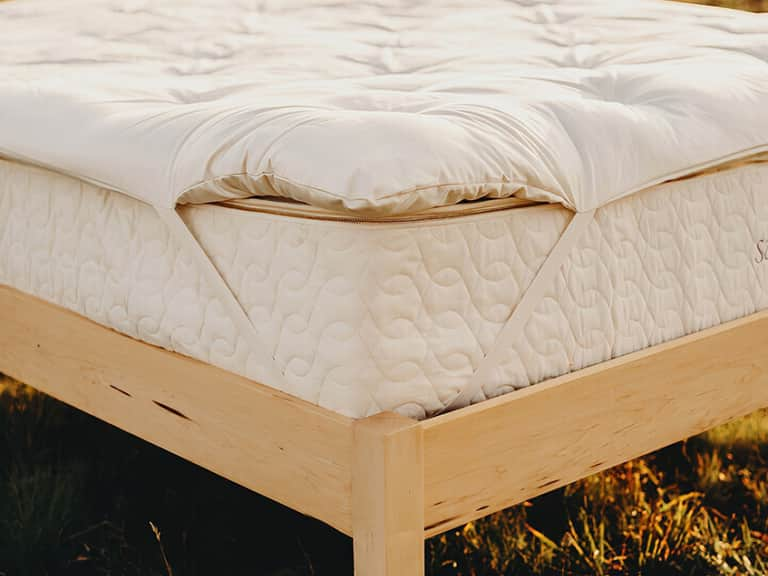
The mattress is the foundation of the crib sleep setup. It should be firm, flat, and designed to fit the crib it is used with. A firm surface does not mean an uncomfortable one; it means a surface that does not sag or conform deeply under the baby. The mattress should be used according to its manufacturer’s instructions and the crib’s instructions, including any limits on mattress type, dimensions, or permitted accessories.
Fit deserves more than a passing glance. A mattress that is too small for the crib can leave gaps at the sides, and gaps can create hazards. Check the crib and mattress specifications together rather than relying on a general assumption that all products described as “standard” will fit every combination. Once the mattress is in place, confirm that it is level, secure, and positioned as directed by the crib manufacturer. If a product has been recalled, damaged, altered, or is missing essential parts, do not try to make it work with extra padding or improvised fixes.
A fitted crib sheet should be made for the mattress size and should stay taut and secure at the corners. The elastic should hold the sheet in place, not merely give the impression of a fit when the bed is empty. After making the crib, check each corner and the sheet’s overall tension. If it rides up, bunches, or comes loose easily, stop using it until you have confirmed that it is the correct size and compatible with the mattress.
This is one place where the appeal of simplicity becomes practical. A tightly fitted sheet is easy to inspect. An elaborate stack of layers is not. The aim is to cover the mattress, not to build a softer landscape across it.
What “organic” can—and cannot—tell you
Organic crib bedding attracts families for familiar reasons: interest in agricultural practices, concern about chemical inputs, a preference for natural fibers, or simply a liking for the feel of cotton. These preferences can be part of a thoughtful purchase. The label, however, should be read precisely. A certification may apply to the fiber, the finished textile, or a particular stage of production; standards vary. Look for the name of the certifying body and check what the claim covers rather than treating “organic” as a universal safety guarantee.
Material choice also affects the ordinary business of living with a baby. Cotton is widely available and generally straightforward to wash. Some fabrics feel smoother; others have a brushed or textured hand. A label may specify washing temperature, drying method, or whether a sheet should be prewashed. Those details are useful because nursery bedding is not a museum textile. It will meet spit-up, diaper leaks, laundry baskets, and the occasional 2 a.m. search for a clean replacement.
There is no need to assume that the softest fabric is the safest, or that an organic fabric is automatically more breathable, more durable, or better suited to every infant. Fabric performance depends on construction, fit, care, and the conditions in which it is used. A well-made sheet that fits correctly and can be washed as directed is generally more useful than a more complicated product whose claims are difficult to evaluate.
For caregivers who prefer organic materials, the sensible approach is to choose a certified product from a transparent manufacturer, follow its care instructions, and keep the sleep surface consistent with safe-sleep recommendations. The certification can inform a decision about materials. It cannot substitute for checking the sheet’s fit or removing loose bedding.
Fitted sheets and mattress pads are not the same thing
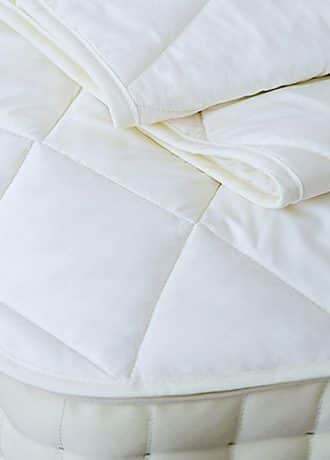
A fitted sheet covers the mattress and is intended to stay in place. A mattress pad is an additional layer that may be designed to cushion, protect, or manage moisture. The distinction matters because every extra layer raises practical questions: Is it permitted by the crib and mattress manufacturers? Does it fit securely? Can it shift, bunch, or create a soft or uneven surface? Is it intended for an infant sleep environment?
Some families consider a protective layer because babies are famously indifferent to the schedule of laundry. But convenience is not a safety standard. Before using any pad, check the instructions for the crib and mattress, as well as the pad’s own age and use directions. If the manufacturer does not clearly state that the product is appropriate for the particular crib mattress and infant sleep use, do not infer that it is simply because it is called a “crib pad” or appears to fit.
When a pad is permitted, it should fit snugly and remain flat beneath the fitted sheet. It should not make the sleep surface soft, uneven, or loose, and it should not interfere with the sheet’s ability to stay securely attached. Avoid layers that can move independently or create folds. A pad with elastic edges is not automatically suitable: its size, construction, intended use, and compatibility still need to be verified.
Flat pads call for particular care. Their shape may cover the mattress, but a flat rectangle does not necessarily attach to it. If a pad can shift, bunch, or come loose, it may undermine the very neatness it was meant to provide. Do not secure a pad with pins, clips, ties, or homemade fasteners. If you cannot achieve a reliably flat, secure setup using the manufacturer’s intended method, leave the pad out and use the mattress with a fitted sheet.
Waterproofing is another feature that can sound self-explanatory while concealing different constructions. Some products use a membrane or coating; others rely on a particular fabric structure. Terms such as “breathable,” “natural,” or “waterproof” describe product qualities, not a blanket assurance about infant safety. Read the specifications and follow the instructions. Do not add a second pad or improvised barrier to improve performance.
Safe sleep is a setup, not a shopping category
Parents and caregivers encounter a large vocabulary of nursery products—nests, loungers, positioners, wedges, sleep pods, padded rails, and decorative bedding sets—often presented in the same visual language as ordinary sheets. Their appearance in a store or online catalogue does not mean that they belong in a crib during sleep. For routine infant sleep, follow the guidance of trusted health authorities rather than product styling or customer photographs.
The AAP recommends placing babies on their backs for every sleep, including naps, on a firm, flat surface intended for infant sleep. Keep soft objects and loose bedding out of the sleep area. Do not use inclined sleep products or devices that position a baby unless specifically directed by a qualified medical professional for an individual medical reason. If a baby falls asleep in a car seat, stroller, swing, or other sitting device, move them to a firm, flat sleep surface as soon as it is practical and safe to do so.
These recommendations are not a judgment on a caregiver’s taste or effort. They are a reminder that an infant’s sleep environment has a different purpose from an adult bed or a decorative nursery display. The room can be soft, charming, and personal. The crib itself should remain spare.
Babies may spit up while sleeping, and adults sometimes worry that back sleeping will make it harder for them to clear their airway. Health authorities advise that back sleeping remains the recommended position for healthy infants. If a baby has a medical condition or a caregiver has a specific concern about positioning, ask the child’s clinician rather than changing the sleep arrangement or adding a wedge.
Washability is a safety-adjacent virtue
When choosing crib sheets, it is worth considering how they will behave after repeated laundering. A sheet that shrinks enough to pull away from the mattress, loses its elastic, or becomes difficult to keep smooth is no longer a reliable choice. Follow the care label, wash new bedding before first use if the manufacturer recommends it, and check the fit again after laundering.
Keep enough correctly fitting sheets on hand to make changes manageable. This is less glamorous than buying a coordinated bedding collection, but it is more likely to solve a 3 a.m. problem. Store clean sheets where they are easy to reach; place used bedding in a laundry hamper rather than leaving it in the crib or draped over a rail where it might fall into the sleep space.
Inspect bedding periodically. Look for torn fabric, loose threads, damaged elastic, seams that are coming apart, or any area that could unravel. Retire a sheet that no longer fits securely or has become worn enough to bunch. If a mattress pad is in use with clear manufacturer approval, inspect it too and ensure it remains flat, intact, and compatible with the fitted sheet.
Cleaning routines should follow product instructions. Do not assume that hot water, bleach, fabric softener, or high-heat drying is appropriate for every textile. The goal is clean, intact bedding, not a contest in which the most aggressive laundering wins. If a product’s care directions are unclear, ask the manufacturer or choose a simpler alternative whose maintenance is easy to understand.
A practical nursery checklist
In the last days before a baby arrives, a checklist can provide welcome relief from the larger, less controllable questions. For the crib, keep it short:
- Confirm that the crib is assembled correctly and that the mattress is approved for use with it.
- Check that the mattress is firm, flat, undamaged, and the correct size for the crib.
- Use a fitted sheet designed for that mattress and verify that it stays taut at every corner.
- Keep pillows, blankets, quilts, stuffed toys, bumpers, and other soft objects out of the crib during sleep.
- Use a mattress pad only if the crib, mattress, and pad manufacturers’ instructions support that use; confirm it stays flat and secure beneath the sheet.
- Place the baby on their back for every sleep, on the firm, flat surface.
- Keep the sleep area free of cords, loose fabric, and other objects that could enter the crib.
- Check the condition and fit of sheets and any permitted pad after laundering.
- Review current guidance from a trusted health authority and ask the baby’s clinician about individual concerns.
The list is intentionally unadorned. A nursery may contain many useful things: a chair, a lamp, a stack of books, a basket for laundry, a drawer full of clothes that will be outgrown before they seem to have been worn. But the sleep surface has a narrower assignment. It needs to be firm, flat, correctly fitted, and clear.
Questions caregivers often ask
Do I need organic crib sheets?
No particular fabric label makes a crib sheet safe by itself. Families may choose organic textiles because of material preferences or production standards, but the sheet must still fit securely, be used as directed, and be kept in good condition. Safe-sleep guidance applies regardless of fiber or certification.
Can I put a blanket over the fitted sheet?
Loose blankets should not be placed in an infant’s sleep space. If you are concerned that a baby may be cold, ask a clinician about appropriate clothing and wearable sleep products. Avoid adding blankets, quilts, or other loose layers to the crib.
Is a waterproof crib mattress pad necessary?
It is not a substitute for a fitted sheet, and it should not be assumed necessary or suitable. Consult the crib and mattress instructions, then check the pad’s instructions and intended age range. Use one only if its use is expressly compatible with the equipment and the product can remain flat and secure beneath the sheet. When in doubt, leave it out and ask the manufacturer or the child’s clinician.
Should I buy a bedding set?
Most decorative bedding-set extras—such as quilts, pillows, comforters, and bumpers—do not belong in the crib during infant sleep. A fitted sheet, chosen for secure fit and easy care, is the central textile. Buying fewer pieces can make both the setup and the laundry routine simpler.
What if my baby rolls over?
Continue to place the baby on their back at the start of every sleep. Once a baby can roll from back to stomach and stomach to back independently, caregivers should follow current guidance from their clinician and trusted health authorities. Keep the crib free of loose bedding and positioning devices; do not use straps or products intended to hold a baby in one position.
The quietest kind of preparation
There is a certain satisfaction in preparing a room for someone who has not yet arrived. One can fold tiny clothes, wash the sheets, and imagine the day-to-day life that will eventually fill the space. The temptation is to make the crib look complete by adding all the things that signify comfort to an adult. For an infant, however, a complete sleep setup is defined less by abundance than by restraint.
Choose bedding for secure fit, clear instructions, and manageable care. If organic materials matter to your household, examine what the certification actually covers. Treat mattress pads as optional products that must meet the equipment instructions, not as default layers. Keep the sleep surface free of accessories that can shift, soften it, or obstruct it. And when advice online becomes noisy, return to current recommendations from reliable health authorities and the baby’s clinician.
In the end, safe crib bedding is not a complicated collection. It is a clean sheet that stays put, on a firm and flat mattress, in an otherwise uncluttered crib. The rest of the nursery can carry the flourishes. The place where the baby sleeps can remain reassuringly simple.
Note: This article is general educational information and is not a substitute for medical advice. Safe-sleep recommendations can be updated; caregivers should consult current guidance from trusted health authorities and speak with a pediatric clinician about individual questions.